1
/
of
1
DNA
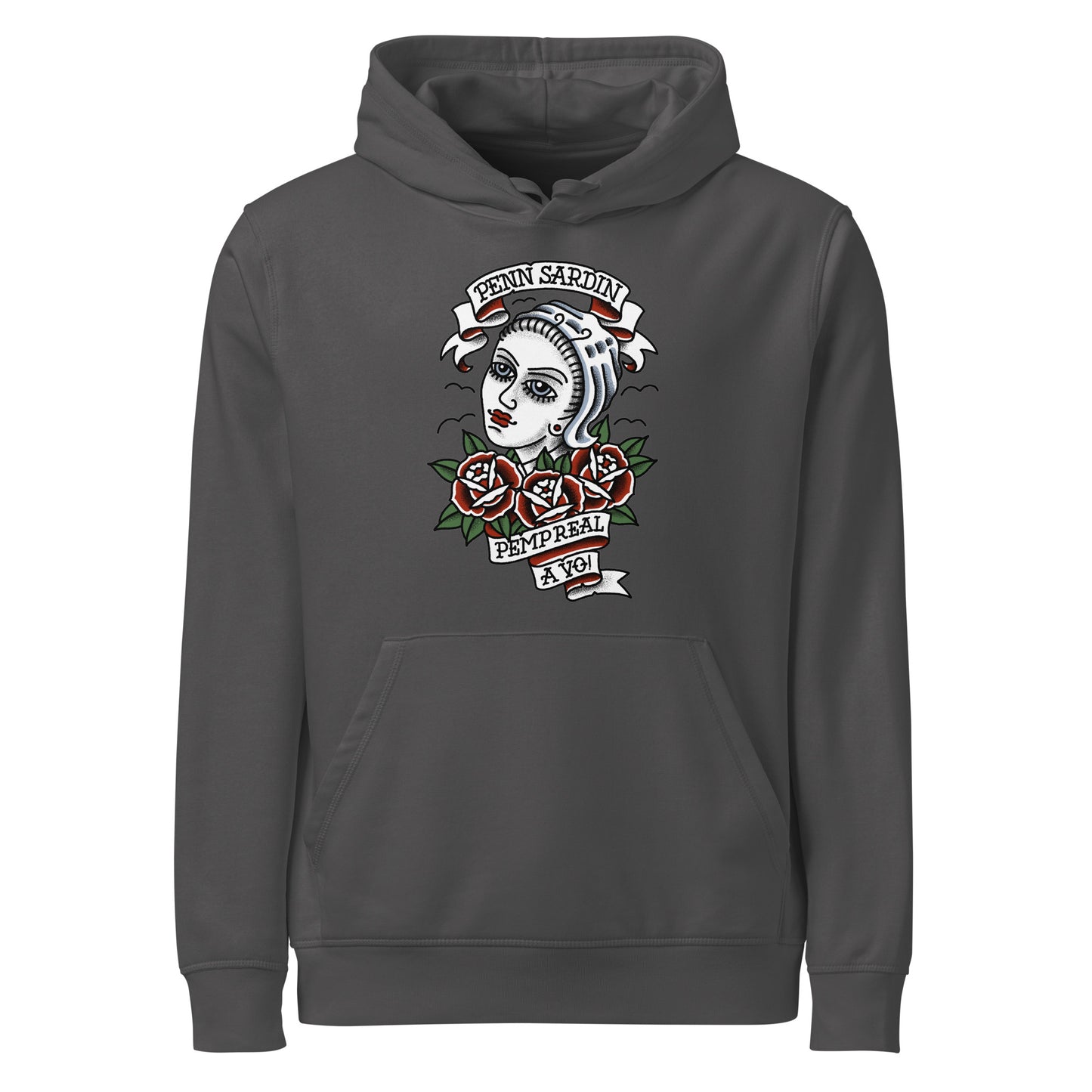
Penn Sardin (Sardine Workers' Strike) - Fair Wear - Organic - Unisex Hoodie - FREE DELIVERY
Penn Sardin (Sardine Workers' Strike) - Fair Wear - Organic - Unisex Hoodie - FREE DELIVERY
Regular price
$85.00 CAD
Regular price
$92.00 CAD
Sale price
$85.00 CAD
Free Shipping to USA, EU, UK (Worldwide from $100)
Quantity
Couldn't load pickup availability
SECURE PAYMENT
This design embraces the centenary of one of the most significant events in European women’s labour history, i.e. the great sardine workers’ strike in Douarnenez on the Finistère coast of Brittany in November 1924. ‘Penn Sardin’ literally means “Sardine Head”, a name given to the local women sardine cannery workers.
Douarnenez became the first sardine port in France. The whole town lived on sardines. In 1924, canneries abounded, twenty-two, plus a can factory, 2,000 workers, 5,000 fishermen. Under the impetus of Nantes capitalism, stemming in part from the slave trade, a new class of industrialists settled in Douarnenez. Two worlds faced each other. The difficult living conditions of the Penn Sardins worsened. Canning factory workers were the least paid in France.
Despite a law passed in 1919, women workers worked 10 hours a day, had no bonus for overtime and worked nights, which was supposedly illegal. In the winter of 1924, 2,100 people, including 600 women, demonstrated against their wage of 80 cents an hour and the fact that they had to go to the factory at any time day or night, when a shipment of sardines was delivered.
The Douarnenez sardine workers' strike in November 1924 to demand a wage increase was the beginning of a mobilization that lasted several months in the region. The strikers, mostly women, marched with the slogan "Pemp real a vo!" (Five reals it will be!). Joséphine Pencalet, who belonged to the Douarnenez metalworkers' union, took part in the strike. Her name in Breton, Penn kalet, meant "hothead" or "stubborn".
The gendarmes repressed the strikers and called in strikebreakers, and the mayor, Daniel Le Flanchec, who had publicly supported the revolt, was suspended from office. The Minister of Labor proposed mediation but the struggle continued. The workers were joined by sailors and occupied the streets, the town was blocked, and the conflict was covered by the media.
On December 5, 1924, the newspaper L'Humanité reported on the charge against the demonstrators, carried out on behalf of the Ministry of the Interior, in an article entitled "Le sang ouvrier a coulé à Douarnenez" ("Workers' blood has flowed in Douarnenez"). The minutes of Le Flanchec's suspension from office were also published. The report of the suspension of Daniel Le Flanchec for rebellion provoked national media coverage of the strike in the daily newspapers, including Paris Soir and La Dépêche de l'Aube, which was moved by "the provocative intransigence of the sardine cannery owners".
On January 6, 1925, the factory owners gave in to the workers' demands.
This design was created by Berlin based Brazilian tattoo artist Caetano Calomino.
***
Stay cozy and chic with this mid-weight hoodie. Made from a soft blend of organic cotton and recycled polyester, it’s ideal for layering on chilly days. The sleek half-moon detail on the back adds a subtle touch of style, making it an easy go-to for any casual outfit.
• 80% organic cotton, 20% recycled polyester for production in the US
• 85% organic combed ring-spun cotton, 15% recycled polyester for production in Europe
• Mid-weight fabric ideal for mid-season wear
• Unisex fit
• Half-moon detail on the back
• The fabric of this product holds certifications for its organic cotton content under GOTS (Global Organic Textile Standard) and OCS (Organic Content Standard). Additionally, GRS (Global Recycled Standard) certifies the recycled content present in the product.
• Blank product sourced from Bangladesh
The sizes correspond to a bigger size in the European market, customers from that region should order a size down.
This product is made especially for you as soon as you place an order, which is why it takes us a bit longer to deliver it to you. Making products on demand instead of in bulk helps reduce overproduction, so thank you for making thoughtful purchasing decisions!
Douarnenez became the first sardine port in France. The whole town lived on sardines. In 1924, canneries abounded, twenty-two, plus a can factory, 2,000 workers, 5,000 fishermen. Under the impetus of Nantes capitalism, stemming in part from the slave trade, a new class of industrialists settled in Douarnenez. Two worlds faced each other. The difficult living conditions of the Penn Sardins worsened. Canning factory workers were the least paid in France.
Despite a law passed in 1919, women workers worked 10 hours a day, had no bonus for overtime and worked nights, which was supposedly illegal. In the winter of 1924, 2,100 people, including 600 women, demonstrated against their wage of 80 cents an hour and the fact that they had to go to the factory at any time day or night, when a shipment of sardines was delivered.
The Douarnenez sardine workers' strike in November 1924 to demand a wage increase was the beginning of a mobilization that lasted several months in the region. The strikers, mostly women, marched with the slogan "Pemp real a vo!" (Five reals it will be!). Joséphine Pencalet, who belonged to the Douarnenez metalworkers' union, took part in the strike. Her name in Breton, Penn kalet, meant "hothead" or "stubborn".
The gendarmes repressed the strikers and called in strikebreakers, and the mayor, Daniel Le Flanchec, who had publicly supported the revolt, was suspended from office. The Minister of Labor proposed mediation but the struggle continued. The workers were joined by sailors and occupied the streets, the town was blocked, and the conflict was covered by the media.
On December 5, 1924, the newspaper L'Humanité reported on the charge against the demonstrators, carried out on behalf of the Ministry of the Interior, in an article entitled "Le sang ouvrier a coulé à Douarnenez" ("Workers' blood has flowed in Douarnenez"). The minutes of Le Flanchec's suspension from office were also published. The report of the suspension of Daniel Le Flanchec for rebellion provoked national media coverage of the strike in the daily newspapers, including Paris Soir and La Dépêche de l'Aube, which was moved by "the provocative intransigence of the sardine cannery owners".
On January 6, 1925, the factory owners gave in to the workers' demands.
This design was created by Berlin based Brazilian tattoo artist Caetano Calomino.
***
Stay cozy and chic with this mid-weight hoodie. Made from a soft blend of organic cotton and recycled polyester, it’s ideal for layering on chilly days. The sleek half-moon detail on the back adds a subtle touch of style, making it an easy go-to for any casual outfit.
• 80% organic cotton, 20% recycled polyester for production in the US
• 85% organic combed ring-spun cotton, 15% recycled polyester for production in Europe
• Mid-weight fabric ideal for mid-season wear
• Unisex fit
• Half-moon detail on the back
• The fabric of this product holds certifications for its organic cotton content under GOTS (Global Organic Textile Standard) and OCS (Organic Content Standard). Additionally, GRS (Global Recycled Standard) certifies the recycled content present in the product.
• Blank product sourced from Bangladesh
The sizes correspond to a bigger size in the European market, customers from that region should order a size down.
This product is made especially for you as soon as you place an order, which is why it takes us a bit longer to deliver it to you. Making products on demand instead of in bulk helps reduce overproduction, so thank you for making thoughtful purchasing decisions!
Share